Engine development often depends on finding problems before customers ever encounter them. For Ford, motorsports provides an unusually demanding environment where engineers can push high-performance V8 engines to extreme limits and use the resulting data to improve production vehicles.
The company’s approach treats racing not only as a competition but also as a real-world engineering laboratory. Components are subjected to high temperatures, sustained engine speeds, vibration and prolonged periods of heavy use. When something fails, engineers can study exactly why it happened and use those findings to improve future designs.
Why Engine Failures Can Be Valuable
A component that survives normal road conditions may behave differently under the extreme demands of professional racing.
Race engines can experience stresses that would be difficult to reproduce consistently during ordinary road testing. Continuous high-speed operation, repeated acceleration, elevated temperatures and severe vibration can expose weaknesses in individual components.
Instead of viewing every test failure simply as a setback, engineers can use the failure as information. Identifying a vulnerable component during controlled testing gives manufacturers an opportunity to redesign it before a similar problem appears in a production vehicle.
This approach can help improve durability while also giving engineers a better understanding of how computer models and laboratory testing compare with actual operating conditions.
What Ford Learned From Its Coyote V8
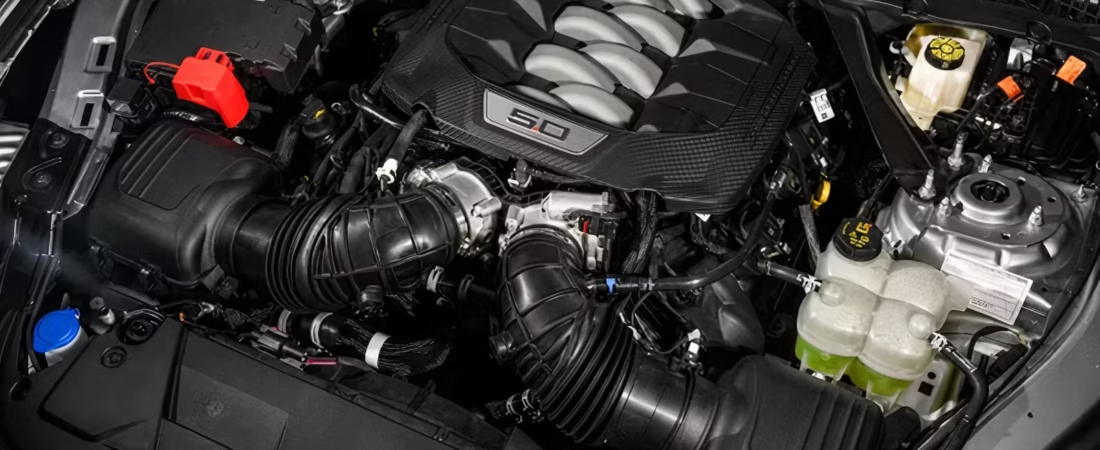
Ford’s 5.0-liter Coyote V8 has benefited from this development philosophy.
According to the information provided by Ford, intensive racing conditions revealed a weakness associated with the engine’s camshaft chain-drive system. Engineers were able to investigate the failure, refine the design and incorporate durability improvements into production engines.
The process illustrates how motorsports technology can move in both directions. Production engines can provide a foundation for competition, while racing can expose weaknesses and generate engineering data that eventually benefits road-going vehicles.
Racing Engineers and Production Teams Work Together
The process involves more than simply collecting information from a race weekend.
Ford’s racing engineers and pit crews monitor engines during competition, including telemetry generated while the vehicles are operating under demanding conditions. Physical engines can also be examined after racing to identify signs of wear or structural stress.
That information can then be shared with product development engineers.
The production engineering teams can compare telemetry, inspection results and teardown reports with their engineering models. If the data indicates a potential weakness, engineers can redesign the relevant component and test the updated version.
This creates a feedback loop between motorsports and vehicle development.
Engines Can Be Torn Down to Find the Cause
When an engine experiences a significant problem, examining the failed component is only the beginning.
Engineers can disassemble the engine and inspect individual parts for evidence of excessive heat, vibration, fatigue, wear or other forms of stress. The objective is to identify the underlying cause rather than simply replace the failed part.
Understanding why a component failed can help engineers determine whether the problem was related to material selection, component geometry, lubrication, thermal conditions, assembly or another factor.
That information can then influence future testing and production engineering.
Testing Is About Predictability, Not Just Finding Defects
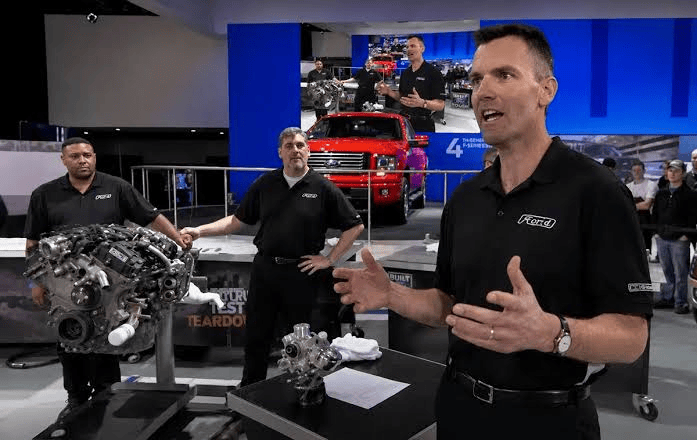
One of the broader lessons from Ford’s approach is that successful testing is not necessarily defined by having no failures.
Engineers want to understand the boundaries of a component and predict how it will behave under different conditions. A failure during controlled testing can therefore provide valuable information about those limits.
If engineers can accurately predict when and why a component is likely to fail, they can improve the design and increase confidence in the final product.
This makes failure analysis an important part of engineering validation.
How Racing Technology Reaches Everyday Vehicles
The benefits of this process can extend beyond professional motorsports.
Ford’s Coyote V8 is used in production vehicles such as the Mustang GT and has also served as the basis for competition engines. Improvements developed through racing programs can therefore influence engines that are ultimately used by everyday drivers.
A vehicle used for commuting may never experience the same stress levels as a race car, but components developed and tested under extreme conditions can potentially provide additional durability margins in normal use.
The same principle can apply to trucks and other vehicles subjected to demanding workloads, including towing and heavy-duty operation. Ford’s approach to applying engineering improvements across its production lineup can also be seen in newer models, including the 2027 Ford Maverick Lobo and Tremor, which bring different performance and capability priorities to the compact truck segment.
The Mustang Connection
Ford’s motorsports activities provide a direct link between the company’s performance vehicles and its racing programs.
The Mustang’s 5.0-liter Coyote V8 has been used as a foundation for competition applications, including the Mustang GT3 program.
This creates an engineering environment where developments can move between road and track applications. Racing provides extreme testing conditions, while production vehicles provide a high-volume environment in which engineering improvements can be implemented and evaluated.
Looking Toward Le Mans
Ford’s racing development strategy is also expanding into endurance competition.
The company has planned a Le Mans Hypercar program featuring a 5.4-liter naturally aspirated V8 derived from the Mustang’s 5.0-liter Coyote architecture.
Endurance racing is particularly demanding because vehicles must operate at high performance levels for extended periods. Reliability therefore becomes just as important as outright speed.
The experience gained from such competition could provide another opportunity for Ford engineers to evaluate engine durability, thermal management and component performance under extreme conditions.
Why Motorsport Remains an Engineering Laboratory
Motorsports can provide automakers with a unique testing environment because competition exposes vehicles to conditions that are difficult to replicate during ordinary consumer driving.
For engine manufacturers, racing can reveal weaknesses involving temperature, vibration, sustained high RPM operation and repeated high-load cycles.
The information collected under those circumstances can complement laboratory testing and computer simulations.
The ultimate goal is not necessarily to make a production engine capable of surviving a professional race. Instead, racing can help engineers discover potential weaknesses earlier and develop solutions that improve the reliability and performance of road vehicles.
Conclusion
Engine failures are usually viewed as problems, but controlled failures can provide valuable engineering information.
Ford’s use of racing to test and refine its V8 engines demonstrates how motorsports can serve as a development laboratory. Telemetry, physical inspections and engine teardowns can help engineers identify weaknesses, understand why components fail and develop improvements for production vehicles.
The Coyote V8 provides a clear example of this relationship between racing and road cars. As Ford continues its motorsports programs, extreme competition will likely remain an important source of data for developing engines that are more durable, predictable and capable under demanding conditions.
FAQs
Ford uses racing conditions to expose engines and components to extreme heat, vibration, high engine speeds and sustained loads. Engineers analyze telemetry and physically inspect engines after competition to identify weaknesses and develop potential improvements.
The Coyote is Ford’s 5.0-liter V8 engine architecture used in performance vehicles such as the Mustang. Its development has also been connected to Ford’s motorsports programs, allowing engineers to transfer knowledge between racing and production applications.
A controlled failure can reveal how and why a component reaches its limits. Engineers can study the failure, modify the design and conduct additional testing, potentially reducing the likelihood of similar problems occurring in production vehicles.