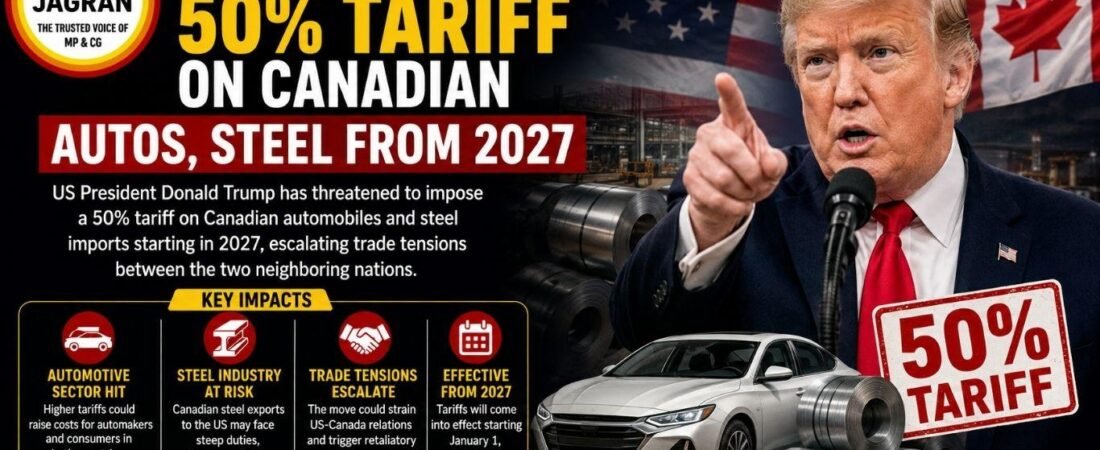
The United States is preparing to significantly increase tariffs on Canadian automotive and steel imports, adding another layer of tension to the already strained trade relationship between Washington and Ottawa. President Donald Trump announced that a 50% tariff on Canadian cars, trucks, automotive parts and steel will take effect on January 1, 2027.
The announcement follows the breakdown of recent trade discussions between the two countries and could have consequences for manufacturers, importers, consumers and businesses on both sides of the border.
What Are the New Canadian Tariffs?
President Trump announced that the United States will raise tariffs on Canadian automotive and steel imports to 50% beginning January 1, 2027. The planned measures cover cars, trucks, automotive parts and steel.
Foreign automobiles and parts imported into the United States are currently subject to a 25% tariff, while Canadian steel already faces a 50% levy. The proposed changes would therefore represent a major increase in duties affecting Canadian automotive products.
Trump has also indicated that vehicles manufactured in the United States would not be subject to the new tariffs.
The announcement came after trade negotiations between the United States and Canada failed to reach an agreement, further increasing uncertainty for companies that depend on cross-border supply chains.
How Could the Tariffs Affect American Consumers?
Tariffs are collected from importers at the U.S. border, meaning American businesses importing Canadian products would be responsible for paying the duties. Companies could then decide whether to absorb the additional costs or pass some or all of them on to customers.
For the automotive industry, higher tariffs could increase the cost of imported vehicles and components. Because North American vehicle production relies heavily on cross-border supply chains, higher duties on parts could also affect manufacturers that assemble vehicles in the United States.
Trade experts have warned that consumers could ultimately face higher prices if businesses pass increased import costs through the supply chain.
Canada Plans Retaliatory Tariffs
Canada has indicated that it will respond with tariffs of its own. The planned Canadian measures are expected to target several categories of U.S. products, including steel, dairy, appliances, agricultural equipment, pulp and paper, and electronics.
Canadian officials have said the retaliatory tariffs are scheduled to take effect on September 8.
The prospect of reciprocal tariffs could increase costs for businesses operating across the border and make future negotiations more difficult. Companies may also need to reconsider sourcing strategies and supply-chain arrangements if the dispute continues.
Why Is the Automotive Industry Particularly Vulnerable?
The automotive sector is closely integrated across the United States and Canada. Vehicles and components can cross the border multiple times during the manufacturing process before a finished vehicle reaches consumers.
This means tariffs on automobiles and parts can have effects beyond the initial imported product. Manufacturers may face higher production costs if components become more expensive, while dealerships and consumers could encounter higher prices.
Companies may also look for alternative suppliers or adjust production locations to reduce exposure to tariffs. However, shifting established supply chains can take significant time and investment.
What Is Behind the Escalating Trade Dispute?
The latest tariff announcement follows growing disagreements between the United States and Canada over trade policies and market access.
The Trump administration has argued that Canada has imposed unfavorable treatment on U.S. commercial interests, including automobiles. A July presidential proclamation accused Canada of discriminating against U.S. commerce and maintaining tariff policies that Washington considered unreasonable.
Canada, meanwhile, has defended its trade policies and prepared retaliatory measures in response to U.S. tariffs.
The dispute highlights the difficulty of negotiating trade agreements when automotive, agricultural, industrial and other economic issues become interconnected.
Could the Tariffs Increase Inflation?
Higher tariffs can contribute to price pressures when businesses pass additional import costs to consumers. The impact, however, depends on how companies respond, whether suppliers absorb part of the costs and whether businesses can find alternative sources.
The automotive sector could be particularly sensitive because manufacturers operate through complex international supply chains.
While the overall impact on U.S. inflation may depend on the scale and duration of the tariffs, prolonged trade restrictions could create additional cost pressures for manufacturers, retailers and consumers.
What Could the Trade War Mean for Businesses?
Businesses that rely on Canadian imports may need to assess how the proposed tariffs could affect their operating costs. Automotive manufacturers, parts suppliers, steel users, distributors and retailers could all face additional uncertainty.
Companies may consider alternative suppliers, renegotiate contracts or adjust inventory strategies. However, businesses that operate across the U.S.-Canada border may have limited short-term alternatives because of the highly integrated nature of the North American economy.
The dispute could also affect investment decisions if companies become uncertain about future tariff rates and trade rules.
What Happens Next?
The immediate focus will likely remain on negotiations between Washington and Ottawa and the implementation of Canada’s proposed retaliatory measures.
Further discussions could potentially lead to changes in tariff policies, exemptions or other trade arrangements. If no agreement is reached, businesses on both sides of the border may need to prepare for a prolonged period of higher trade costs.
The situation could also influence broader North American manufacturing strategies, particularly in industries that depend on cross-border supply chains.
Conclusion
The planned 50% U.S. tariffs on Canadian automotive and steel imports represent another major escalation in the trade dispute between the two countries. The measures could affect manufacturers, importers, suppliers and consumers as businesses adjust to potentially higher costs and increased uncertainty.
Canada’s planned retaliation adds another layer of pressure, raising the possibility of broader disruption across multiple industries. The eventual economic impact will depend heavily on how long the tariffs remain in place, whether companies pass costs to consumers and whether Washington and Ottawa can return to productive trade negotiations.
For businesses involved in U.S.-Canada commerce, monitoring tariff developments and reviewing cross-border supply chains will remain important as the January 2027 implementation date approaches.
FAQs
The announced tariffs on Canadian cars, trucks and automotive parts are scheduled to take effect on January 1, 2027.
Canadian steel already faces a 50% U.S. tariff, and the latest announcement maintains the 50% rate for steel imports while expanding the proposed 50% rate to Canadian automotive products.
They could. U.S. importers would pay the tariffs at the border, and businesses may pass some or all of those additional costs to consumers through higher vehicle or component prices.