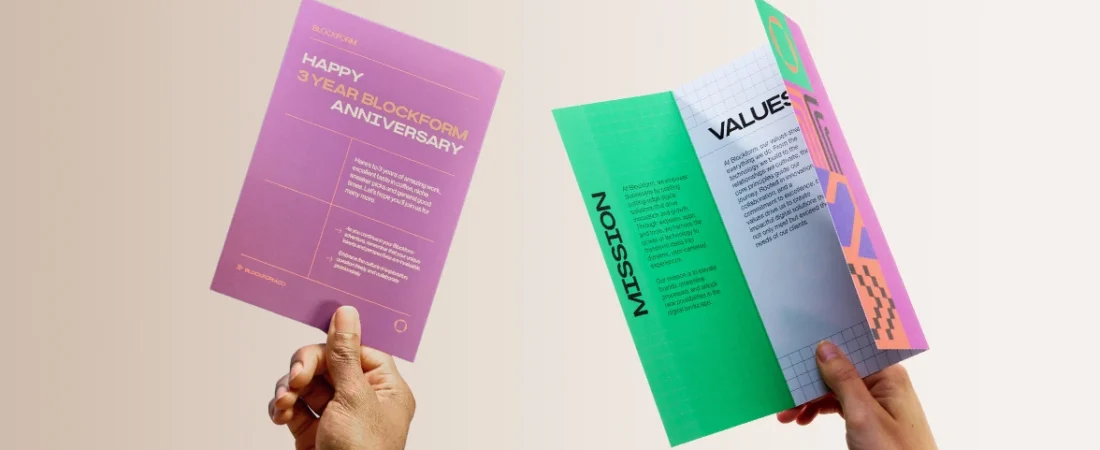
Print marketing continues to give businesses a tangible way to communicate with customers, promote products and services, and strengthen brand visibility. Among the many printed marketing materials available, brochures and flyers remain two of the most commonly used formats.
Although both can promote a business, they serve different purposes. Flyers are generally designed to communicate a concise message quickly, while brochures provide more space for detailed information and structured brand storytelling.
The better option depends on the business’s marketing objective, target audience, budget, distribution strategy, and the amount of information that needs to be communicated.
What Is a Flyer?
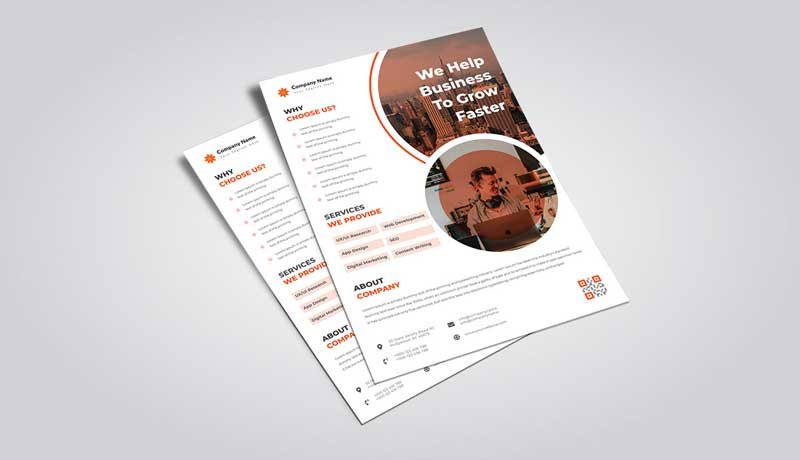
A flyer is typically a single, unfolded printed sheet designed to communicate one primary message. Businesses commonly use flyers to promote sales, events, new products, grand openings, special offers, and local marketing campaigns.
Because flyers can be produced and distributed in large quantities, they are particularly useful when businesses want to reach a broad audience quickly. Their design usually focuses on a strong headline, compelling visuals, concise information, and a clear call to action.
For example, a restaurant could use a flyer to promote a limited-time discount, while a retail store could distribute flyers announcing a seasonal sale. A local service business could also use flyers to introduce a new service or encourage customers to visit its website.
What Is a Brochure?
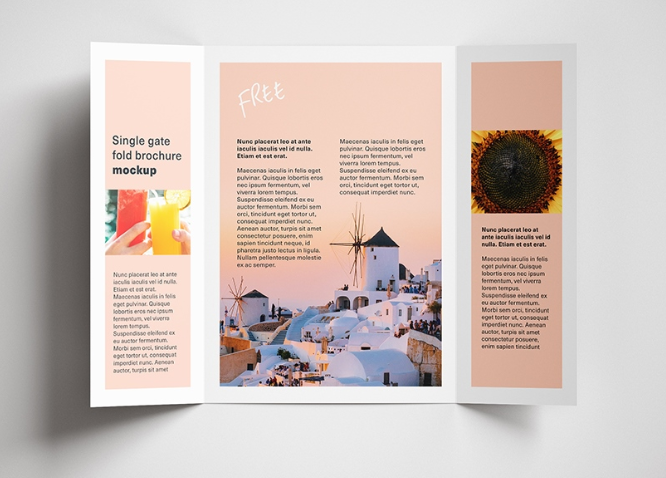
A brochure is a folded or multi-panel printed marketing piece that provides more detailed information about a business, product, or service. Common formats include bi-fold, tri-fold, and Z-fold brochures.
The additional space allows businesses to organize information into multiple sections. A brochure can explain services, highlight product features, present benefits, introduce a company, answer common questions, and include contact information or calls to action.
Brochures are therefore particularly useful when potential customers need more information before making a purchasing decision. They are often used during sales meetings, trade shows, client consultations, property presentations, and other situations where a business has an opportunity to engage with a more interested audience.
Brochures vs. Flyers: Key Differences
The main difference between brochures and flyers is not simply their physical format. It is how each one supports the marketing objective.
| Factor | Flyers | Brochures |
| Format | Usually, a single sheet | Folded or multi-page |
| Content | Short and focused | Detailed and structured |
| Main purpose | Awareness and immediate action | Education and consideration |
| Distribution | Mass distribution | Targeted distribution |
| Cost | Generally lower per piece | Generally higher per piece |
| Best for | Promotions, events and announcements | Services, products and company information |
| Design | Bold and easy to scan | Structured and information-rich |
| Customer engagement | Quick interaction | Longer engagement |
Flyers generally prioritize speed and reach, while brochures prioritize depth and information.
When Should Businesses Choose Flyers?
Flyers can be an effective choice when a business has a straightforward message that needs to reach a large number of people.
Promoting Limited-Time Offers
Businesses running discounts, seasonal promotions, clearance sales, or special offers can use flyers to communicate the offer quickly. A strong headline, attractive visual, promotional details, and a clear CTA can make the message easy to understand.
Promoting Events
Flyers are well suited to events because they can highlight the most important details, including the event name, date, location, time, registration information, and contact details.
Reaching Local Customers
Local businesses can distribute flyers in neighborhoods, retail locations, community spaces, events, and other relevant locations. This makes them useful for businesses seeking geographically targeted exposure.
Supporting New Product Launches
A flyer can introduce a new product or service without requiring a large amount of information. Businesses can highlight the key benefit and direct interested customers to a website, store, landing page, or sales team.
Working With a Limited Printing Budget
Flyers generally require less material and simpler production than brochures, making them suitable for campaigns that depend on high-volume distribution.
When Should Businesses Choose Brochures?
Brochures are better suited to situations where customers need more information before taking action.
Explaining Multiple Services
A business offering several services can use different brochure panels to explain each offering. This can be more effective than trying to fit multiple service descriptions onto a single flyer.
Supporting Sales Meetings
A brochure can serve as a professional leave-behind after a sales presentation or client meeting. Prospects can review the information later and share it with other decision-makers.
Promoting Complex Products
Businesses selling products with multiple features, specifications, packages, or benefits may benefit from the additional space available in a brochure.
Building Brand Credibility
A professionally designed brochure can provide a more comprehensive presentation of a company. Businesses can incorporate their brand identity, photography, service information, testimonials, contact details, and other supporting content.
Supporting Trade Shows and Business Events
Brochures can provide trade show visitors with information they can take away after speaking with a company representative. They can therefore extend the impact of an in-person conversation beyond the event itself.
Which Is More Cost-Effective?
There is no universal answer because printing costs depend on factors such as quantity, paper stock, finishing, size, color, folding, and design requirements.
However, flyers are generally more economical on a per-piece basis because they use a simpler format and can be produced in high quantities. Brochures can cost more because they may require heavier paper, folding, additional finishing, or more complex production.
Businesses should therefore consider cost per marketing objective, rather than simply choosing the cheapest printed product.
For example, spending more on a brochure may make sense when the goal is to support a high-value sale. Conversely, a flyer may be the better investment when the objective is to distribute thousands of promotional messages within a local market.
Which Is Better for Brand Building?
Brochures generally provide more opportunities for brand storytelling because they offer additional space for company information, services, imagery, product details, and supporting content.
Flyers can still contribute significantly to brand awareness, particularly when they use consistent logos, typography, imagery, messaging, and brand colors.
The choice therefore depends on the type of brand interaction a business wants to create. A flyer can generate initial awareness, while a brochure can provide the information needed to deepen that interaction.
Can Businesses Use Brochures and Flyers Together?
Yes. In many cases, using both formats can create a more complete print marketing strategy.
A business could use a flyer to attract attention and encourage an immediate response, then use a brochure to provide detailed information to people who show stronger interest.
For example, a real estate company could distribute flyers promoting an upcoming property open house. During the event, interested visitors could receive brochures containing property details, floor plans, amenities, and contact information.
Similarly, a B2B company could use flyers at an industry event to attract visitors to its booth and provide brochures to prospects who want more information.
This approach allows each format to perform the role for which it is best suited: flyers for reach and immediate attention, brochures for information and deeper engagement.
How Businesses Can Choose the Right Format

Before ordering printed materials, businesses should consider five key questions:
- What is the marketing goal?
If the goal is immediate awareness or promotion, a flyer may be appropriate. If the goal is education or sales support, a brochure may be better. - How much information needs to be included?
Simple messages work well on flyers, while detailed offerings generally require brochure space. - Who is the target audience?
A broad local audience may respond well to flyers, while qualified prospects may be better suited to brochures. - How will the material be distributed?
High-volume handouts favor flyers, while sales meetings, trade shows, and targeted presentations can favor brochures. - What is the available budget?
Businesses should consider quantity and production requirements when deciding which format offers the best value.
Design Tips for Effective Flyers
A successful flyer should communicate its primary message quickly. Businesses should use a prominent headline, strong visuals, concise copy, clear contact information, and a noticeable CTA.
QR codes can also connect printed materials to landing pages, websites, registration forms, or promotional offers, making it easier to connect offline marketing with digital campaigns.
Most importantly, the flyer should avoid excessive text. A reader should be able to understand the main offer or message without having to study the entire page.
Design Tips for Effective Brochures
Brochures require a stronger information hierarchy because they contain more content.
Businesses should organize information into logical sections and use headings, images, short paragraphs, lists, and other visual elements to make the material easy to navigate.
The front panel should communicate the business or offer clearly, while the inside panels can provide supporting information. Contact details and the primary CTA should be easy to find.
High-quality printing and appropriate paper stock can also reinforce the professional image of the business.
Conclusion
Brochures and flyers are not competitors as much as they are different tools for different marketing objectives.
Flyers are generally better for quick promotions, events, local awareness, mass distribution, and time-sensitive offers. Brochures are better for detailed service information, product education, sales presentations, trade shows, and brand storytelling.
The right choice ultimately depends on the business’s message, audience, budget, and distribution strategy. For many campaigns, the strongest approach may be to use both: flyers can generate awareness and attract attention, while brochures can provide the deeper information that helps interested prospects move toward a purchasing decision.
FAQs
Not necessarily. Flyers are generally better for quick, high-volume communication, while brochures are more suitable when customers need detailed information. The better option depends on the campaign objective.
Retail stores, restaurants, fitness businesses, event organizers, local service providers, and other businesses promoting specific offers or events can use flyers to reach customers quickly.
Yes. Businesses can use flyers for broad awareness and brochures for prospects who need more information. Combining the two formats can help businesses support different stages of the customer journey.