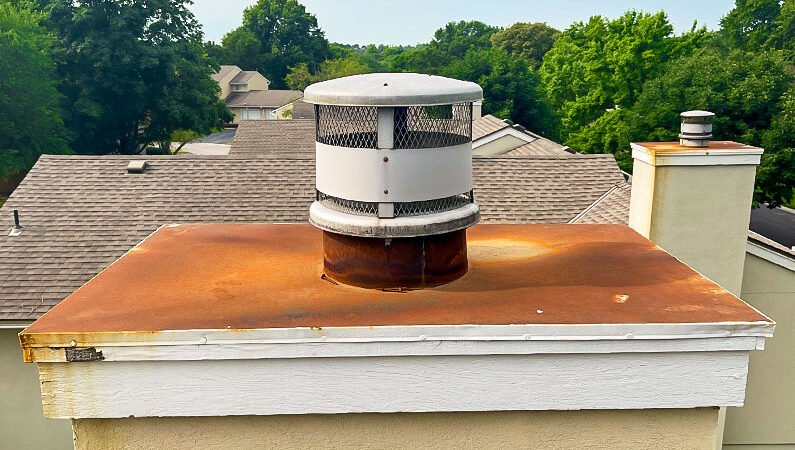
Rust stains running down a brick chimney can make it look as though the masonry itself is deteriorating. However, bricks and mortar do not rust. In most cases, those reddish-brown streaks are caused by rusting metal components attached to or installed inside the chimney.
Chimney caps, flashing, spark guards, crown covers, dampers, and metal flue liners can corrode when exposed to moisture and changing weather conditions. If the underlying problem is ignored, rust can spread, damage surrounding materials, and contribute to costly chimney or roof repairs.
Understanding where chimney rust comes from and addressing it early can help homeowners prevent more extensive damage.
What Causes Rust on a Chimney?
Brick and mortar are not capable of rusting, but chimneys contain several metal components that can corrode. When these parts are exposed to rain, humidity, snow, or prolonged moisture, oxidation can occur.
As rust develops on metal components, water can carry the residue down the chimney. Because brick and mortar are porous, they can absorb the rusty water and develop noticeable stains.
Older chimneys may be more susceptible to corrosion, particularly when their metal components have worn protective coatings or were made from materials that are less resistant to moisture. Stainless steel and properly protected metal components generally provide greater resistance to rust.
Exterior Chimney Components That Can Rust
Many sources of chimney rust are located outside the chimney, particularly above the roofline.
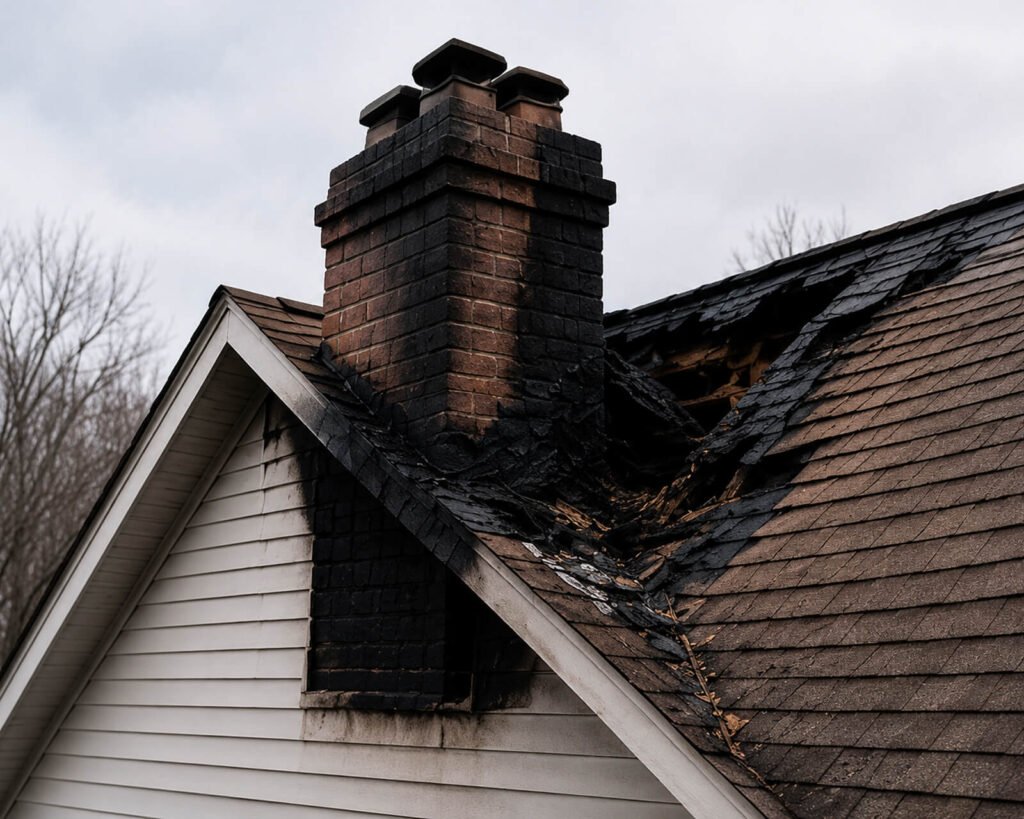
Chimney Cap
The chimney cap sits at the top of the chimney and helps keep rain, leaves, debris, and animals from entering the flue. Because it is directly exposed to the elements, a metal cap can eventually develop corrosion.
A deteriorating chimney cap can also allow additional moisture into the chimney, potentially creating further problems.
Spark Guard
Some chimney caps include a mesh spark guard designed to help prevent sparks and embers from escaping while keeping pests and debris out.
The mesh, screws, or other fasteners can corrode over time. Rust from these components may contribute to staining around the upper portion of the chimney.
Flashing
Chimney flashing is installed where the chimney meets the roof. Its primary purpose is to help prevent water from entering the structure at this vulnerable junction.
When flashing begins to rust or deteriorate, homeowners may notice rust-colored streaks around the chimney or signs of moisture near the roof. Damaged flashing can eventually contribute to water intrusion, making prompt repairs important.
Crown Cover or Chase Cover
Some chimneys have a metal cover designed to protect the top of the chimney structure. Depending on the design, this may be referred to as a crown cover or chase cover.
Because the cover is exposed to rain, snow, wind, and sunlight, it can corrode over time. Poor drainage or an improperly designed surface can allow water to collect, accelerating deterioration.
Chimney Components Inside the Home That Can Rust
Not all chimney rust originates outside. Several interior components may also corrode.
Flue Liner
Flue liners protect the inside of a chimney and help safely direct combustion gases away from the home. Some liners are made from clay or other nonmetallic materials, while others use metal.
Metal liners can develop corrosion when exposed to moisture or certain combustion byproducts. A damaged or severely corroded liner may require professional inspection and replacement.
Damper
A fireplace damper is a movable metal component that regulates airflow through the chimney. Moisture entering the chimney can cause the damper to rust, particularly if the chimney lacks adequate protection from rain.
Firebox Components
The firebox is the area where a fireplace fire burns and is primarily constructed from masonry. However, it can contain metal components that may eventually corrode.
Heavy rust, deteriorated metal, cracking, or other visible damage around the firebox should be evaluated by a qualified professional.
How to Prevent and Remove Chimney Rust
The first step in addressing chimney rust is identifying its source. Simply removing the reddish stains from the brick will not solve the problem if a corroding metal component remains above it.
Inspect the Chimney
Look for rust on the chimney cap, spark guard, flashing, crown cover, fasteners, and other visible metal components. Rust streaks on the masonry can provide clues about where the corrosion is originating.
Roof and chimney inspections can involve significant fall hazards, so homeowners should avoid climbing onto a roof if they do not have the appropriate equipment and experience.
Replace a Severely Rusted Chimney Cap
If the chimney cap has extensive corrosion, replacement may be more practical than continued cleaning or painting.
Stainless steel is commonly used for chimney components because of its resistance to moisture and corrosion. A properly fitted cap can also help limit the amount of rain entering the chimney.
Repair or Replace Damaged Flashing
Flashing is an important part of the home’s water-resistance system. If it is badly rusted, loose, or damaged, repairing or replacing it can help prevent moisture from entering around the chimney.
Because flashing connects directly to the roof system, this work is often best handled by an experienced roofing or chimney professional.
Clean Rust Stains From Brick
Once the source of the rust has been addressed, the stains on the masonry can be cleaned.
Depending on the type and severity of the stain, homeowners may use an appropriate masonry cleaner or commercial rust-stain remover. Test any cleaning solution on an inconspicuous area first to make sure it does not damage or discolor the brick.
Treat or Paint Metal Components
Surface rust on certain metal components may be removable with an appropriate rust remover, wire brush, or sandpaper. Once loose corrosion has been removed and the surface is properly prepared, a paint or protective coating designed for the specific metal and outdoor conditions may help slow future corrosion.
However, severely weakened metal should generally be replaced rather than simply painted.
Apply a Masonry Water-Repellent
A masonry water-repellent may help reduce moisture absorption by brick and mortar when used appropriately. Choose a product specifically designed for chimney masonry and follow the manufacturer’s instructions.
Waterproofing should not be used as a substitute for repairing damaged flashing, caps, liners, or other components that are allowing water into the chimney.
Keep the Chimney Clean
Regular chimney maintenance can help identify problems before they become more serious. A professional chimney inspection and cleaning can reveal corrosion, cracks, damaged components, buildup, and other issues that may not be obvious from the ground. Regular maintenance of other parts of the home, such as gutters, can also help manage rainwater and reduce moisture-related problems. Learn more about how often you should clean your gutters.
The frequency of cleaning depends on how often and what type of fireplace or heating appliance is used. Homeowners should follow recommendations from qualified chimney professionals and applicable safety guidelines.
When Should You Call a Professional?
Some relatively simple maintenance tasks may be suitable for experienced homeowners, but chimney and roof work can involve significant safety risks.
Generally, homeowners may be able to handle tasks such as:
- Cleaning minor surface rust from accessible components
- Replacing certain chimney caps when safely accessible
- Replacing rusted exterior fasteners
- Applying appropriate protective coatings
Professional assistance is recommended for more complex work, including:
- Replacing chimney flashing
- Repairing or replacing a flue liner
- Repairing a damaged damper
- Addressing firebox deterioration
- Investigating significant water intrusion
- Performing an initial or comprehensive chimney inspection
If rust is accompanied by water damage, crumbling masonry, structural cracks, or extensive metal deterioration, professional evaluation should not be delayed.
Conclusion
Rust stains on a brick chimney are usually a warning sign of corrosion affecting one or more metal components rather than a sign that the bricks themselves are rusting. Chimney caps, spark guards, flashing, crown covers, dampers, and metal flue liners can all develop corrosion when exposed to moisture.
Removing the visible stains can improve the chimney’s appearance, but the underlying source of the rust needs to be addressed first. Regular inspections, proper chimney maintenance, timely replacement of damaged components, and moisture control can help prevent small corrosion problems from turning into expensive repairs.
FAQs
Yes. Severe corrosion can weaken metal components and may contribute to water intrusion or damage to surrounding roofing and masonry. Addressing the source early can help prevent more extensive repairs.
Painting may be appropriate for certain metal components with limited surface rust after the corrosion has been properly removed and the surface prepared. Severely corroded or weakened components should generally be replaced instead.
A professional inspection is particularly important when you notice extensive rust, damaged flashing, water leaks, cracked masonry, deteriorating metal, or problems with the flue or firebox. Regular inspections can also help identify developing issues before they become major repairs.